
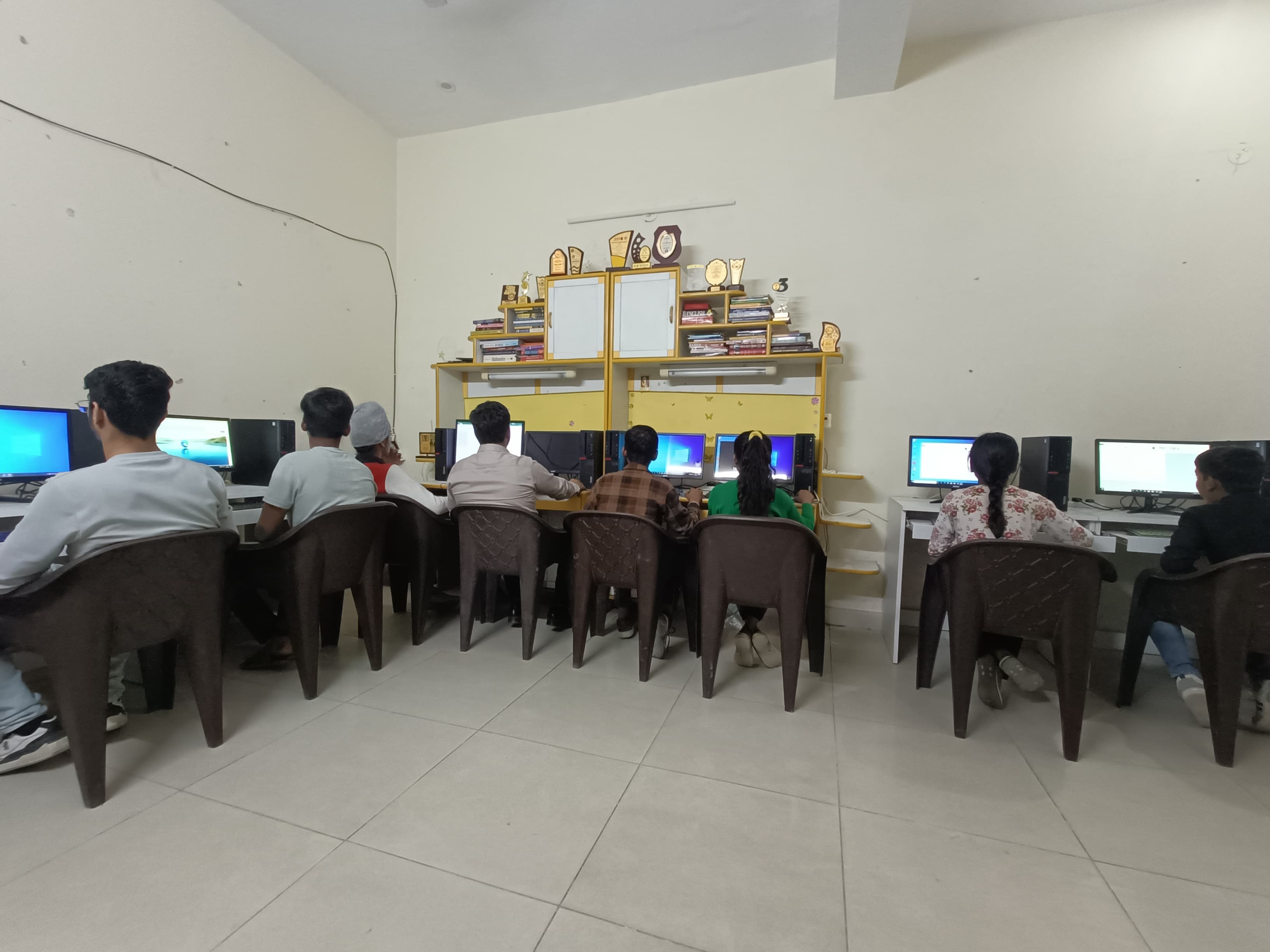
"Which programming language should I learn first?" is the most-asked question at Excellence Computer Centre, Ludhiana. The honest answer depends on what you want to build — and on being realistic about what each language is actually used for in 2026.
The honest decision tree
Before language, ask yourself: what do you want to build?
- Websites or web apps: JavaScript, then maybe Python.
- Mobile apps: Kotlin (Android), Swift (iOS), or Flutter/React Native (both).
- Data science, ML, AI: Python, no debate.
- Enterprise software, banking, telecom: Java.
- Game development, embedded systems, operating systems: C++.
- Just want a programming job in India: Python or Java.
Python — the most beginner-friendly
Pros:
- Easiest syntax. Closer to English than other languages.
- Massive use in data science, AI/ML, automation, backend development, scripting.
- Largest job market in India outside of Java.
- Great first language for understanding programming concepts.
Cons:
- Slow at runtime (rarely matters in 2026 unless you're at scale).
- Not used for mobile or game development.
- Concurrency model is awkward.
Typical Indian starting salaries (2026): ₹3.5–₹6 LPA for freshers; ₹8–₹15 LPA after 3–4 years.
Java — the enterprise standard
Pros:
- Massive enterprise codebases in India: banks, insurance, telecom, government.
- Extremely stable language with backward compatibility.
- Strong typing catches errors early.
- Best for Android development (alongside Kotlin).
- Highest sheer volume of job openings in India.
Cons:
- Verbose syntax. More code for the same thing than Python.
- Steeper learning curve for absolute beginners.
- Enterprise codebases can be unfun.
Typical Indian starting salaries (2026): ₹4–₹7 LPA for freshers; ₹10–₹20 LPA after 4–5 years.
C++ — the performance choice
Pros:
- Maximum control over hardware and memory.
- Used in game development (Unreal Engine), embedded systems, operating systems, browsers.
- Foundation for understanding how computers actually work.
- Required for competitive programming and ICPC-style work.
Cons:
- Hardest of the three to learn well.
- Memory management is your problem.
- Smaller job market in India outside of specific niches.
- Easy to write code with serious bugs.
Typical Indian starting salaries (2026): ₹4–₹8 LPA for freshers (often higher because the supply is smaller).
The recommendations I make to students
"I want a job fast"
Python. Then Django or FastAPI for backend, Pandas/NumPy for data work. 6 months of serious practice and a portfolio of 3–4 projects gets you a job.
"I want to work at a big company"
Java. Spring Boot for backend. The pipeline into TCS, Infosys, Wipro, Capgemini is wider for Java than anything else.
"I want to do AI/ML"
Python without question. Numpy, Pandas, scikit-learn, PyTorch, TensorFlow.
"I want to make games"
C++ if Unreal Engine. C# if Unity. Either works.
"I want to start a software company"
Whatever you can ship fast. Probably JavaScript + a Python backend.
What we teach at Excellence Computer Centre
Our Coding course covers Python, C, and C++ over a 4-month structured curriculum. We start with Python (gentle ramp), then move to C (build the mental model), then C++ (combine both).
The result: students leave knowing not just syntax, but the underlying computer-science concepts that make them effective in any future language they pick up.
The 12-month plan if you're starting from zero
- Months 1–3: Python fundamentals + 5 simple projects.
- Months 4–6: Data structures and algorithms in Python.
- Months 7–9: Pick a specialisation (web dev, data science, automation).
- Months 10–12: One substantial portfolio project + start applying for jobs.
This timeline is realistic. We've watched dozens of Excellence students follow it.
If you want help getting started, our Coding course at Excellence Computer Centre, Ludhiana takes beginners to job-ready in 4 months.